Why Coffee in Japan Never Gives You the Jitters (And What It Taught Me About How We Drink It Wrong)
★ The Verdict
I drank 5 to 7 cups of coffee a day in Tokyo and never once felt jittery. It's not because Japanese coffee is weaker. It's the coarser grind, the slower pour, the food that comes with almost every cup, and the pace of actually sitting down to drink it. Change those things and the jitters change too.
I had 5 to 7 cups of coffee a day in Tokyo.
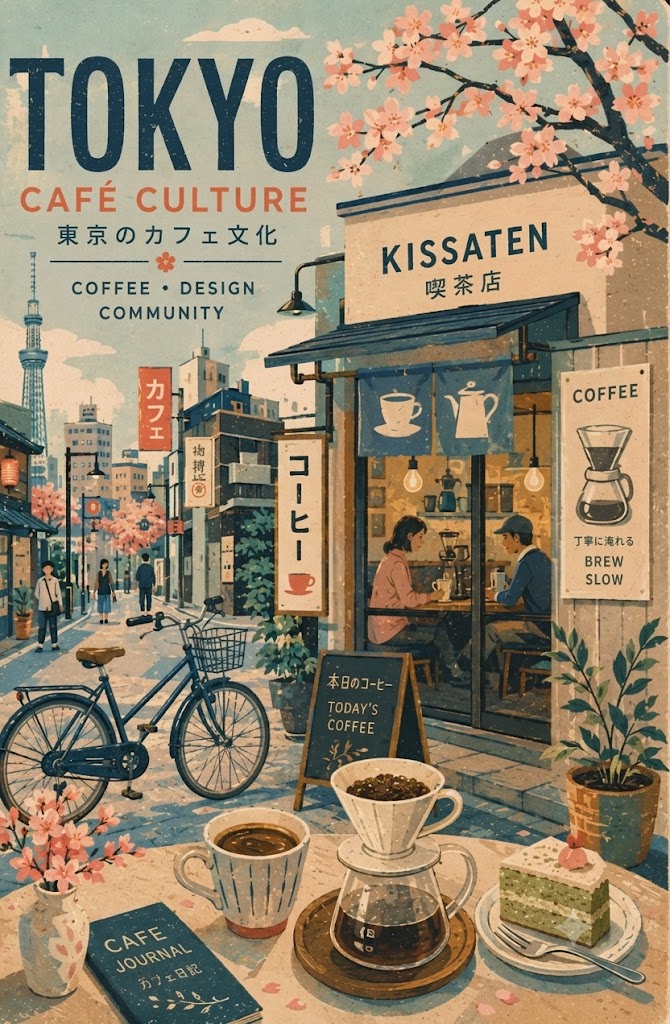
Espressos at a sleek third-wave cafe in Aoyama. Pour overs at a traditional kissaten where the barista has been doing the same thing the same way for 40 years. Canned coffee from a vending machine on the walk to the train at 8am. By any measure, I should have been vibrating.
I wasn’t. Not once.
No jitters. No racing heart. No 2pm crash. Just good coffee, all day, feeling completely normal.
When I got home I started investigating why. What I found changed how I think about coffee entirely. Not just in Japan, but everywhere.
The Bloom Nobody Rushes
The most visible difference in Japanese pour over isn’t the bloom itself. It’s the wait.
Pour over is hard to find in the US. When you do find it, it comes with a premium price tag. In Japan it’s the opposite. At kissaten, at third-wave cafes, even in a random clothing store in Atami that happened to serve coffee, pour over is just what’s available.
Here’s what happens: the barista adds a small amount of hot water to the grounds and stops. The coffee rises. It bubbles. It looks almost like the crema on an espresso shot, a brown dome of CO2 escaping from freshly roasted beans. Then the barista waits. Sometimes 45 seconds. Sometimes closer to a full minute. Only after that does the real pour begin, water added in a slow circular motion.
This isn’t a ceremony for the sake of ceremony. Degassing during that wait lets CO2 escape before extraction really begins. Rush it and the coffee extracts unevenly, producing bitter, harsh flavors. Do it right and you get a cleaner, more balanced cup.
The Grind Is Coarser, The Temperature Is Lower
Traditional Japanese pour over doesn’t try to extract everything from the bean. It uses a coarser grind and a slightly lower water temperature, typically 88 to 90°C (190 to 194°F), compared to the 93 to 96°C (200 to 205°F) that many American specialty shops use at the hot end of the standard range.
This matters more than most people realize.
Caffeine is one of the last things to fully release from the grounds. Acids and sugars come out fast. Caffeine and the harsher bitter compounds need more time in contact with water to extract fully. A coarser grind drains faster, so the water moves through in less time. Less contact time means less caffeine pulled out, even though the cup still tastes complex and clean.
This is one reason the coffee felt different in Japan even when the beans were similar to what I drink at home.
You Always Eat Something
This one sounds obvious in hindsight but I only noticed it after the trip.
In Japan, coffee almost always comes with something to eat. A small wagashi at a kissaten. A cookie. A piece of toast. The culture of drinking coffee completely alone, no food, no snack, just a straight caffeine hit on an empty stomach, doesn’t really exist there.
This is physiologically significant. Food slows gastric emptying, which slows caffeine absorption into the bloodstream. Instead of a sharp caffeine spike 20 to 30 minutes after your first sip, you get a slower, steadier release. The peak is lower. The duration is longer. No jolt, no crash.
You Walk Everywhere
I live in Carlsbad. I drive to the grocery store. I drive to the gym. Most days I’m behind a wheel more than I’m on my feet.
In Tokyo I didn’t drive once. I walked to the train, walked through the station, walked to the cafe, walked back. Every errand turned into a few thousand steps I never planned for. By the end of a normal day I’d covered more ground than I do in a week at home.
Movement helps blunt the jittery feeling caffeine can cause. Caffeine triggers a rise in cortisol, and a body that’s already keyed up from stress feels that rise more sharply. Regular movement lowers your baseline stress response, so the same cup of coffee lands softer.
In other words: Tokyo walks the edge off before it can build up. My car never gives me that chance.
You’re More Relaxed (Yes, This Counts)
Caffeine jitters are partly a stress response. Caffeine stimulates cortisol production, and if your baseline cortisol is already elevated, from work stress, bad sleep, a rushed morning, the effect compounds.
On vacation in Tokyo, your baseline is different. You’re sleeping well. You have nowhere to be. The city, despite its scale, is remarkably calm and orderly. The coffee shops are quiet. Nobody is drinking a triple shot out of a paper cup while running for a train.
The environment is part of the equation.
Pour Over Is Everywhere, and It’s Not Expensive
This surprised me more than anything.
In the US, a carefully prepared pour over at a specialty cafe costs $8 to $12. It’s positioned as a premium experience. In Tokyo, the same quality of preparation, proper bloom, correct temperature, attentive pour, costs $2 to $4 at a kissaten or modern cafe. It’s just coffee. The default.
Pour over in Japan isn’t a luxury product. It’s the baseline. Which means most people are drinking better-extracted, cleaner coffee without thinking about it as a specialty experience at all.
What I Brought Home
I came back from Tokyo and changed three things immediately.
First, I started taking the bloom seriously. I already do pour overs at home, but I was rushing it. Now I wait the full 60 seconds. The difference in cup clarity is real.
Second, I started grinding a little coarser. Less surface area, less contact time, a gentler cup.
Third, I stopped drinking coffee on an empty stomach. Not because I read a study, but because I remembered I never did it once in Japan and it felt better.
The jitters aren’t inevitable. They’re a product of how we’ve decided to drink coffee in America: fast, strong, alone, on an empty stomach, in a state of mild stress.
Japan does it differently. I think they’re right.
Have you noticed a difference in how coffee hits you when you travel? I’d genuinely like to know, especially if you’ve had a similar experience in Japan or anywhere else.
Frequently Asked Questions
Why doesn't coffee in Japan give you the jitters?
Several factors work together. Japanese pour over uses a coarser grind and a slightly lower water temperature, which cuts down the time caffeine has to extract. Food is almost always eaten alongside coffee, which slows caffeine absorption. And the pace of drinking is slower. Coffee in Japan is rarely consumed on the move.
Is coffee in Japan less caffeinated?
Not necessarily less caffeinated by volume, but the extraction method matters. Traditional Japanese pour over, with a coarser grind, a lower temperature around 88 to 90°C, and a long bloom, gives caffeine less time in contact with water than a hotter, finer American-style brew. The result is a cup that's complex and flavorful without the harsh spike.
What is a kissaten?
A kissaten is a traditional Japanese coffee shop, distinct from modern third-wave cafes. They've been around since the early 20th century and are known for meticulous pour over preparation, quiet atmosphere, and a timeless sense of ritual. Many kissaten have been run by the same family for decades.
Is pour over coffee cheap in Japan?
Yes, and this surprises most Western visitors. A carefully prepared pour over at a kissaten or modern cafe in Tokyo typically costs between $2 and $4 USD. The same quality of preparation would cost $8 to $12 in a US specialty coffee shop.
What is the bloom in pour over coffee?
The bloom is the first pour in a pour over, a small amount of hot water added to saturate the grounds. The grounds then rise and bubble as CO2 releases from freshly roasted coffee. Japanese baristas typically wait 45 to 60 seconds during this bloom before continuing the pour. This degassing step improves flavor clarity and is one reason Japanese pour over tastes so clean.